


My experience with digital identity after one year of use [ESTONIA]
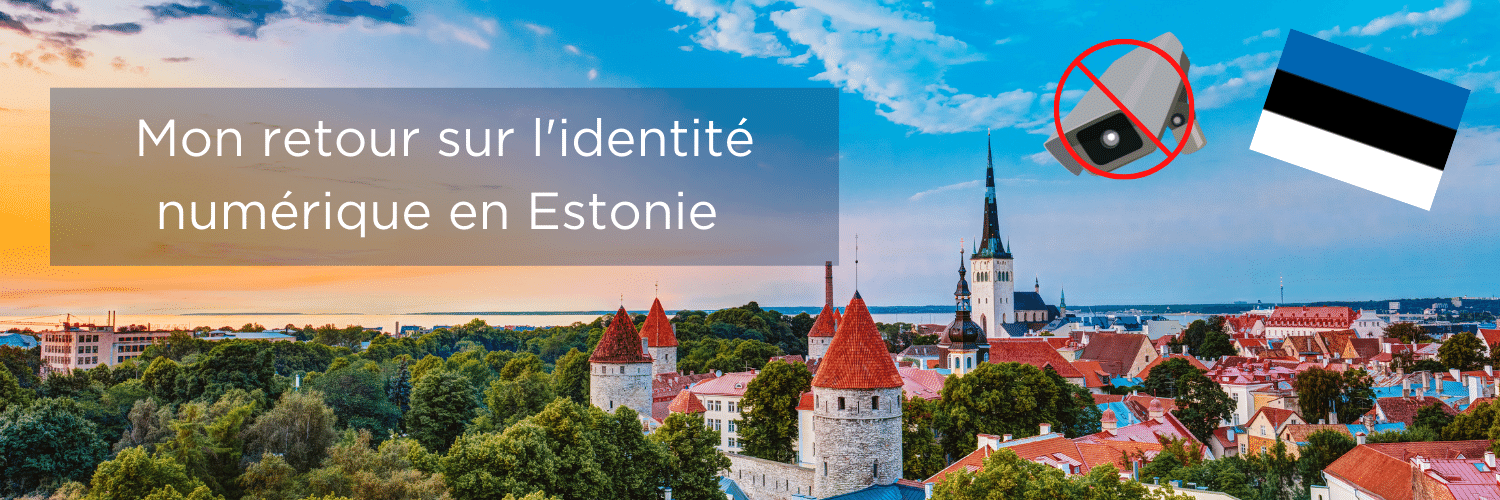
In his A Cypherpunk’s Manifesto, published in 1993, Eric Hughes discussed the need to protect individuals from the excesses of new technologies when they are in the hands of governments. He feared that individuals would be left powerless to protect their privacy in the face of powerful governments seeking to know and control everything. Estonia’s digital identity is an interesting case study, because this nation decided to build its entire administration around digital technology.
I have been living in Estonia for a year and have tried out digital identity and internet voting. In response to the enthusiasm and concerns I hear on this subject, I’d like to share my experience by describing what I’ve encountered.
Initially wary of the threats to freedom enabled by this kind of tool (China), I was won over by the way digital identity was designed in Estonia. It is neither Chinese-style social credit nor a tool for population surveillance. This system allows citizens to identify themselves while disclosing as little information about themselves as possible, using cryptography.
Digital identity is a legal identification system optimized for the internet. It means you never have to share your identity documents with a third party again, and lets you vote and sign all your contracts digitally using a system of encryption keys. This system protects against identity theft and drastically reduces administrative procedures. You can authenticate either with the chip in your identity card or with the one in your SIM card.
This Estonian innovation reminds me of El Salvador’s Bitcoin law. In both cases, these are particularly bold small countries willing to take the risk of innovating to serve their populations and put their countries on the international stage.
The views that follow are the result of my personal experience. I’d be glad to hear about any concerns you may have regarding privacy or security breaches that I might have failed to identify.
What is digital identity in practice?
Digital identity is an authentication method used in Estonia. In practical terms, it is a unique identifier assigned to every Estonian citizen or resident (as with French identity cards). This sequence of 11 digits is the identifier that lets you authenticate both in the digital and physical worlds. Your Estonian identity card also has a chip, like a bank card, so it can connect to your computer through a card reader.
This system gives you digital access to 99% of the country’s public services. Only marriage, divorce, and the purchase of real estate cannot be handled online. Private services that require identity verification, such as banking and insurance, also use this digital identification system.
The system is also open to non-resident foreigners who want to use Estonian digital services from their own countries. The status of digital resident was therefore created, through an Estonian digital residency card available to anyone.
What are the benefits of digital identity?
1. Never share your identity documents again
Digital identity is a tool that lets you prove who you are online without uploading a single identity document. By signing documents with your identity card, you cryptographically prove that you are a real person and genuinely the person you claim to be. This makes the entire usual identity-verification process (KYC) literally obsolete.
In the digital world, it is much more appropriate to prove your identity cryptographically than to upload a photocopy of a physical document. When you upload your identity card or a civil-status record, you entrust a third party with securing those documents. If that party is malicious or fails to secure them, you risk identity theft. A photocopy can be duplicated, and each copy has as much value as the original file. With digital identity, your bank or insurer does not need to verify or keep these documents.
Administrative procedures then become very simple. In form, it looks a lot like the “Sign in with Google” option you see on some websites. But unlike a digital identification system from a Big Tech company, this one has legal standing and proves you are a real human being. After all, a person can have several Google accounts, and in theory you could create one for your dog.
2. Replace handwritten signatures with cryptography
If you sign up for a banking service digitally in France, you will probably have to sign a number of documents. The most common way to do this is to print the documents, sign them by hand, scan them, and send them back. Another option would be to reproduce your signature with your mouse as if it were a pen. Both alternatives amount to awkwardly recreating the physical world’s security model in the digital world.
With digital identity, all you have to do is connect your identity card to your computer and sign your document cryptographically. In form, this is much like signing a bitcoin transaction with a hardware wallet. You never disclose your private key or personal information.
3. Communicate with the administration securely
When you communicate with the Estonian administration, all your exchanges are encrypted. Your identifier lets the person you are communicating with encrypt a document they will send you by email. Once you receive it, dedicated software lets you decrypt it by connecting your identity card to your computer. If it is a file to complete and return, you then simply encrypt it yourself and email it back to your contact.
This system works for all your interactions with the police, social security, schools, universities, the tax administration, the courts, and so on.
What should we think of the online voting system?
In Estonia, the president is elected indirectly. Estonian residents vote to elect members of parliament, who then elect the president. I had the opportunity to take part and try internet voting.
The system differs from the American system of remote voting, where voters cast their ballots by mail or through private electronic kiosks installed at polling stations.
Voters here can vote at a polling station (as in France) or remotely from their own computers, a possibility available since 2005. Remote voting is done by connecting your identity card to your computer after downloading dedicated software.
Many questions then arise:
- Is the content of my vote linked to my identity or IP address?
- How does the government collect and count my vote without compromising the secrecy of the voting booth?
- Can the government or a malicious actor alter, add, or delete votes?
- Is there a database that stores the content of every vote?
- Without a voting booth, how can we be sure voters will not vote under duress?
I don’t have the technical expertise to answer all these questions, but here is what I found:
The online voting period lasts 7 days. Each voter can vote as many times as they like, since only their last vote is counted. Allowing multiple votes helps reduce the risk of voting under duress, which the voting booth is normally meant to prevent. Once you have voted, a confidential QR code appears, allowing you to check that your last vote was submitted.
The entire online voting system is open source. Every voter can independently verify the integrity of the code and look for vulnerabilities. Some Estonians also seem to consider online voting more secure. Indeed, the country has experienced several cases of electoral fraud in the past involving paper ballots.
Other voters, however, fear potential cyberattacks from Russia, given Estonia’s recent independence from the USSR. In 2007, many public institution, media, and bank websites were paralyzed for several weeks following tensions between Russia and Estonia. In case of annexation by Russia, Estonia created a “Data Embassy” in Luxembourg. This digital embassy keeps a copy of Estonian public servers and can function as a remote cloud in the event of a crisis.
Regarding voter turnout, it is interesting to note that the option to vote from home has had no impact on abstention. A nice reminder to politicians who refuse to question themselves and regard abstention as a form of laziness.
Conclusion about my experience:
Digital identity has been a wonderful tool for me. Its compatibility with all the services in the country makes administrative procedures much easier: setting up a business, opening a bank account, signing contracts…
The small country of Estonia has managed to adapt its administration and businesses to the internet, despite the obstacles: separation from the USSR, educating the population about cybersecurity, paralysis of the IT system by Russia, and the discovery of security flaws in chip cards…
Would this system be desirable in France? Knowing the French administration, I find it hard to imagine implementing such a simple, unified system for all public services. Given how quickly Covid restrictions appeared, I’m also wary of how such a system might be designed. Would the government choose an open-source system that citizens could audit? Would it allow itself to use it to curtail the population’s freedoms? Only time will tell… In the meantime, the “France Connect” project is no match for the Estonian ID card or Google sign-in.