


LastBit: DCA and a Lightning debit card
IMPORTANT: When this article was written, Lastbit was in beta. Since then, the company has announced plans to change its name and replace the app with a new one: Striga. If you are discovering Lastbit now, this article is out of date and the features described are currently no longer available.
Would you like to accumulate Bitcoin regularly without worrying about its price? Try the speed of the Lightning Network? Or spend your satoshis with a debit card after converting all your euros?
You’re in the right place: LastBit‘s services may be of interest. This article is not promotional and contains no affiliate links.
LastBit was a Bitcoin buying and selling service built on the Lightning Network. Its mobile app let users schedule automatic Bitcoin purchases monthly, weekly or daily. A second app also let users spend their accumulated satoshis with a Mastercard.
In this article, you’ll learn how to:
- Buy Bitcoin over Lightning through a custodial, KYC platform.
- Move funds to a non-custodial wallet (for greater sovereignty and security).
- Set up scheduled satoshi accumulation.
- Spend some satoshis with a card.
If you’re new to Bitcoin and don’t own any yet, I recommend starting with a simpler platform such as StackinSat. It lets you accumulate Bitcoin on the main chain (on-chain) while remaining in control of your funds.
1. Buying and selling Bitcoin over the Lightning Network
First, a quick reminder of what the Lightning Network is, followed by a look at the features Lastbit offered.
A) What is the Lightning Network?
The Lightning Network is a second-layer network built on top of the Bitcoin protocol. Put simply, it is a payment network that lets you send and receive Bitcoin instantly, at almost no cost.
Bitcoin’s network is currently relatively uncongested, and transaction fees are around 7 to 30 cents. These fees may rise over time, making Lightning increasingly attractive.
Lightning is primarily a payment network for everyday transactions. We don’t recommend keeping all your Bitcoin on it. A prudent allocation would be less than 20% of your holdings.
Advantages of the Lightning Network:
- Almost-free transaction fees,
- Instant transfers,
- More sophisticated Bitcoin services without burdening the main network.
Disadvantages compared with the main network:
- More complicated to use (for now).
- Not as widely accepted.
- Less sovereignty over your funds.
B) How did Lastbit work in practice?
Bitcoin purchases were made in the Lastbit Lite app. Lastbit SIA provided users with a Lithuanian IBAN (EU) in their own name, which could be used to top up their euro account.
If you already had Bitcoin on Lightning and wanted to sell it, you could simply top up your account with that Bitcoin.
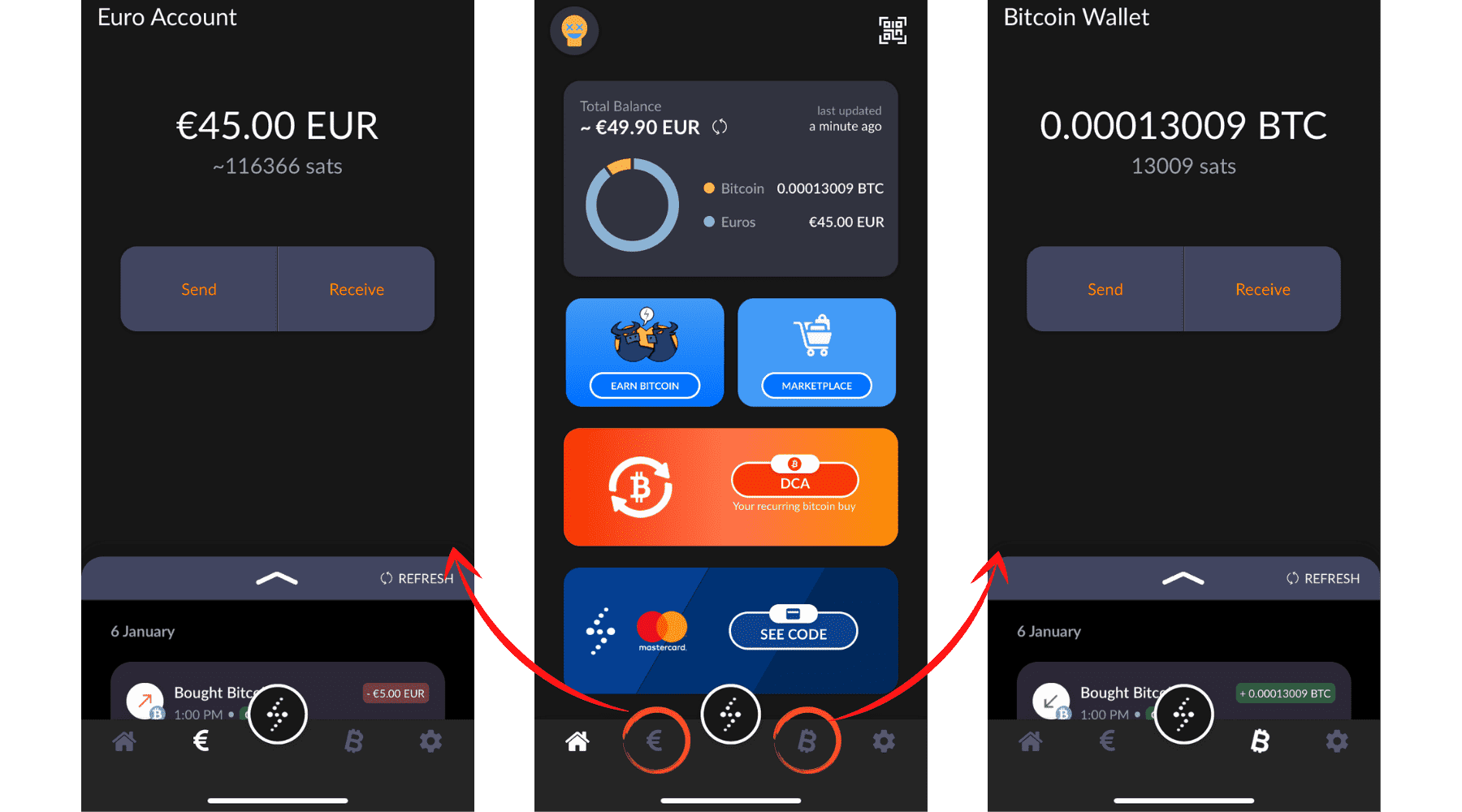
Screenshots of the Lastbit Lite app on iPhone.
C) Do I have sovereignty over my funds?
As long as your Bitcoin is held by Lastbit, you do not have sovereignty over it. Your funds are in the hands of a third party to whom you have delegated their security.
That is not necessarily a problem, provided you withdraw your Bitcoin regularly. Transfer fees are nearly zero, so moving your Bitcoin to a Lightning wallet such as Phoenix or BlueWallet is easy. The ultimate step towards individual sovereignty would be to host your own Bitcoin and Lightning Network node.
2. Accumulating Bitcoin without worrying about the price (DCA)
One of the main concerns when buying Bitcoin is choosing the wrong time. That’s why individuals are often advised to spread their investment over several months. Investing over 12 months gives you an average purchase price across the year.
This approach also lets you increase your investment as your knowledge of Bitcoin grows. Beginners can learn to secure their private keys, and it is more reassuring to start by protecting smaller amounts.
LastBit let users top up a euro account and schedule automatic conversions to Bitcoin. These could be monthly, weekly or daily.
The most important part of this strategy is to stick to the amount and frequency you planned. Set emotions and predictions aside and let the plan run. Although many investors try to time the market, it is often counterproductive and stressful. If you can’t resist trading, consider separating your portfolios and avoid trading the Bitcoin you accumulate gradually.
3. Spending a few satoshis with a bank card
Spending Bitcoin through the banking system may seem surprising, but this transitional approach may appeal to some people. The LastbitCards app offered physical and virtual Mastercards that could be topped up with Bitcoin. The app generated Lightning invoices that you paid to load the card.
One interesting use case is fully adopting Bitcoin and moving away from fiat currencies (hyperbitcoinization). Such a card lets you remain connected to the traditional banking system while using Bitcoin as a store of value and unit of account. You could keep paying any merchant that does not accept Bitcoin. The card does not send your Bitcoin directly to the merchant; it converts it into euros.
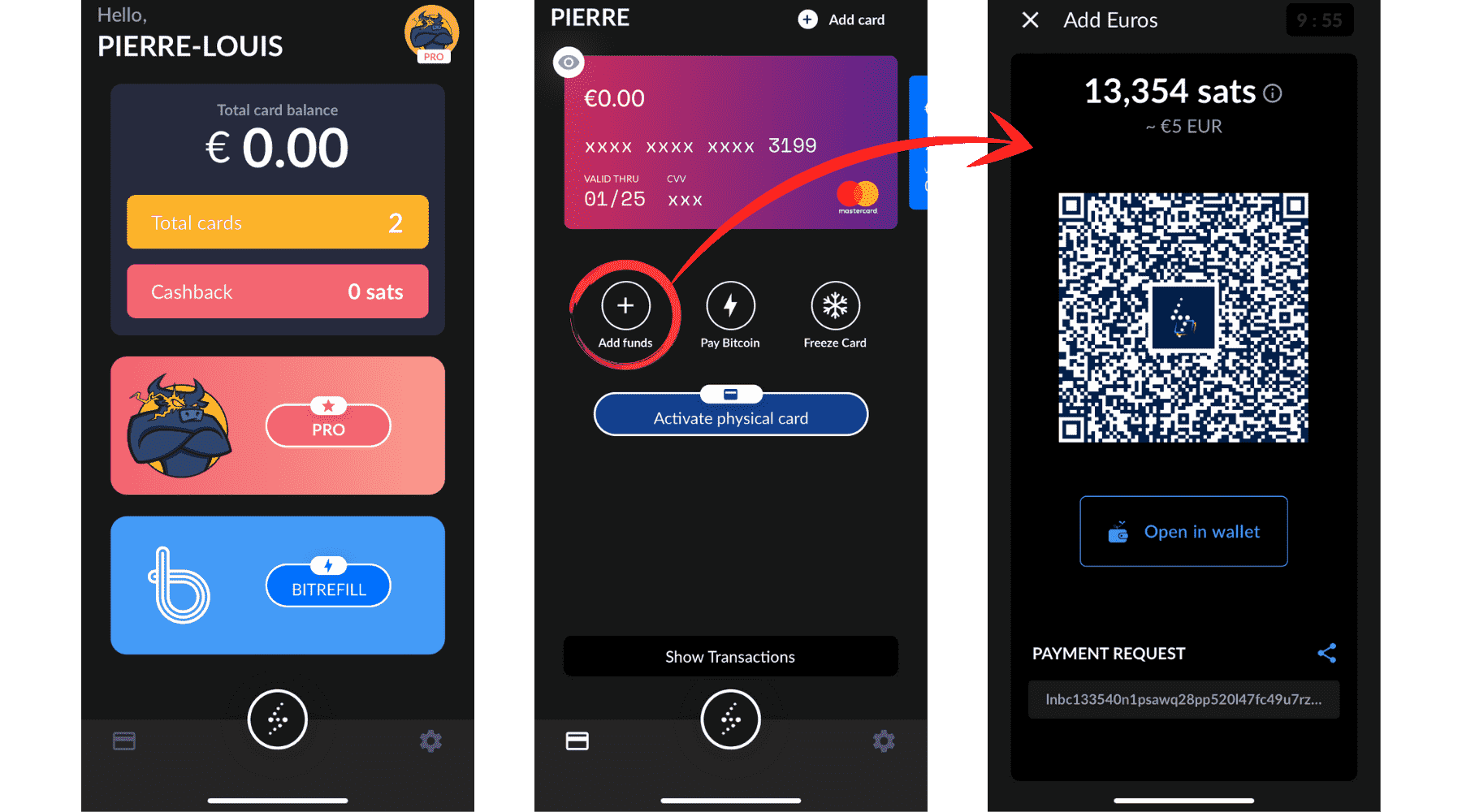
Screenshots of the second app, LastbitCards, on iPhone.
Like a neobank, LastbitCards offered an optional paid plan for €11.99 per month. Premium features included:
- 1% Bitcoin cashback on transactions over €10,
- A second physical card,
- Single-use cards,
- Higher monthly limits,
- Lower euro/Bitcoin conversion fees.
Take action and stack sats!
Now that you know about Lastbit, you have a way into Bitcoin and the Lightning Network. Although the solution was not perfect, it offered innovative features that I enjoyed testing.
All that’s left is to resist the urge to trade and quietly accumulate your satoshis!