


The Baltic Gold Scandal, as told by Jacques de Larosière 


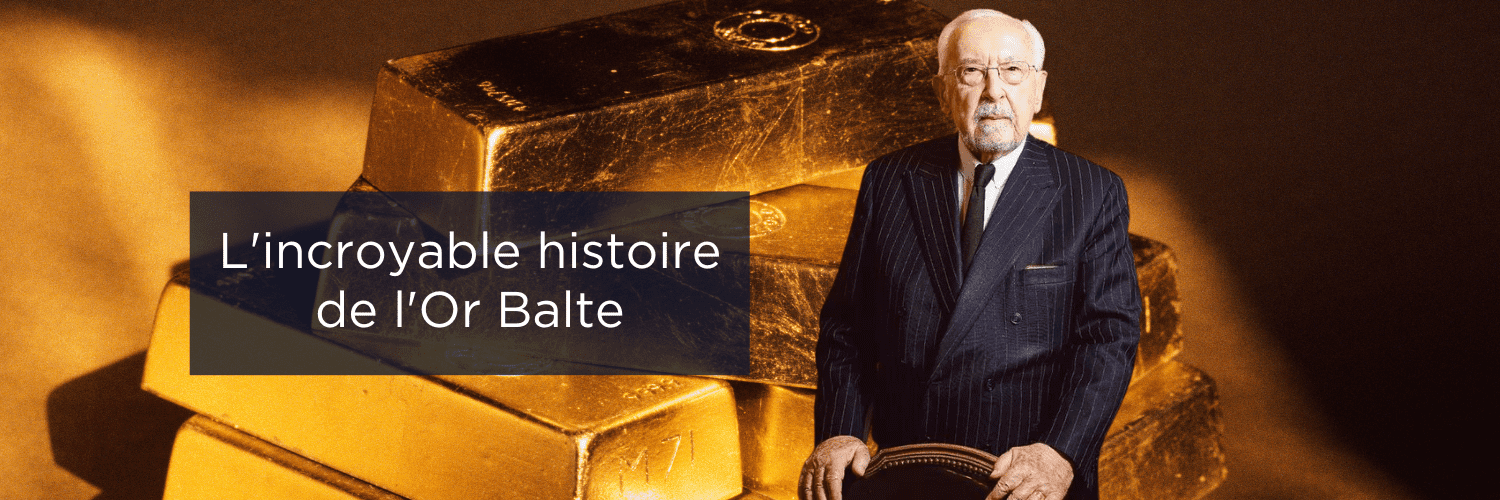
Discover the extraordinary story of the safekeeping of Baltic gold by France, the United Kingdom and the United States. Told by Jacques de Larosière, former Managing Director of the IMF and former Governor of the Banque de France.
Bonus: the dispute over Belgian gold between Belgium, France and the Nazis. 
1. Baltic gold held by France, Britain and the United States
In 1934, amid the rise of Nazism and communism, Lithuania and Latvia sought to protect their gold reserves from potential invaders. They had acquired these reserves when they became independent in 1918. Gold was essential to them, as the monetary system had been based on the gold standard until the First World War.
In the mid-1930s, their gold bars were divided into three lots and placed in the custody of the Banque de France, the Bank of England and the US Federal Reserve (Fed).
From 1940 to 1945, during the German occupation, the gold reserves held by the Banque de France were sent to Senegal, to the village of Thiès. They included Baltic gold and Belgian gold, which we will discuss later. France firmly rejected every request to “return” Baltic gold to Germany and later to the Soviet Union. France’s position was that only the original depositors were entitled to recover their assets.
The Baltic gold was then “forgotten”, but remained in the Banque de France’s gold reserves for decades. As an anecdote, J. de L. recalls noticing a cabinet labelled “Baltic Gold”, handwritten in Sergeant-Major ink, on his first visit to the Banque de France in the 1980s.
2. Returning the bars: three very different positions
After the Berlin Wall fell in 1989, Estonia, Latvia and Lithuania regained their freedom between 1990 and 1991. The Banque de France informed them that gold reserves had been kept…
On 12 September 1991, less than a week after independence, the Banque de France held a ceremony in Paris to return its precious bars to Lithuania. Latvia also recovered all of its reserves held in France. For these countries, the gold was the ultimate symbol of sovereignty and of state continuity through successive occupations.
The Bank of England, by contrast, refused to return the gold, claiming it had already handed it over to the Soviet Union a few years earlier!
The US central bank also refused to return the gold deposits, citing accumulated storage fees. In its view, fees unpaid for 60 years had exceeded the value of the gold held!
3. The standoff between the Baltic states, Britain and the US
Shocked, the Baltic leaders turned to Jacques de Larosière, Governor of the Banque de France, for support.
He firmly advised Latvia and Lithuania not to accept losing their gold in exchange for the “strategic development advice” offered by the US and the UK: “Anyone can give you strategic advice for free! It’s a way to influence your country’s policy to the benefit of the country advising you…”
J. de L. suggested that they arrange a meeting with the Bank of England in London and refuse to leave the Governor’s office until they had recovered the gold. It did not matter if the UK no longer held the disputed bars: it had reserves of its own. A depositor is entitled to demand the return of the reserves entrusted to them.
As for the United States, the Governor of the Banque de France called the Governor of the Federal Reserve Bank of New York and asked him to waive the storage fees, given the exceptional and tragic political circumstances these countries had endured.
After this standoff, the Baltic states recovered their gold reserves down to the last gram. Twenty-five years later, Latvia awarded Jacques de Larosière a medal for his service to the country.
4. The connection with Bitcoin: digital gold
This story is useful for understanding the stakes involved in asset custody. Bitcoin is a digital asset that allows people to hold their own funds by keeping the secret access keys themselves.
The Baltic gold story concerns physical assets held by allied states. Given the twists and turns, it is easy to see why entrusting Bitcoin to exchanges carries risks. Private third parties add further risks to those in our example: bankruptcy, disappearance, hacks, reckless management and dishonest executives…
- An open question: could Bitcoin have allowed the Baltic states to hold their own assets through successive invasions? It’s difficult to rewrite history after the fact, but this “digital gold” is certainly changing the possibilities for the future…
Read more: learn how to secure your Bitcoin yourself.
BONUS: Belgian gold held by the Banque de France
Jacques de Larosière puts the story of Baltic gold in perspective by comparing it with Belgian gold, also stored in the Banque de France’s reserves. This second story tempers the flattering conclusions France might draw from the Baltic episode—especially since Belgium’s reserves were much larger than Latvia’s and Lithuania’s.
During the German occupation, France returned Belgium’s reserves to the occupier, to the detriment of Belgium’s Free Government, which had been established in London.
After the war, however, all of this gold was returned to Belgium, using reserves from the Banque de France…